 Image 1 of 4
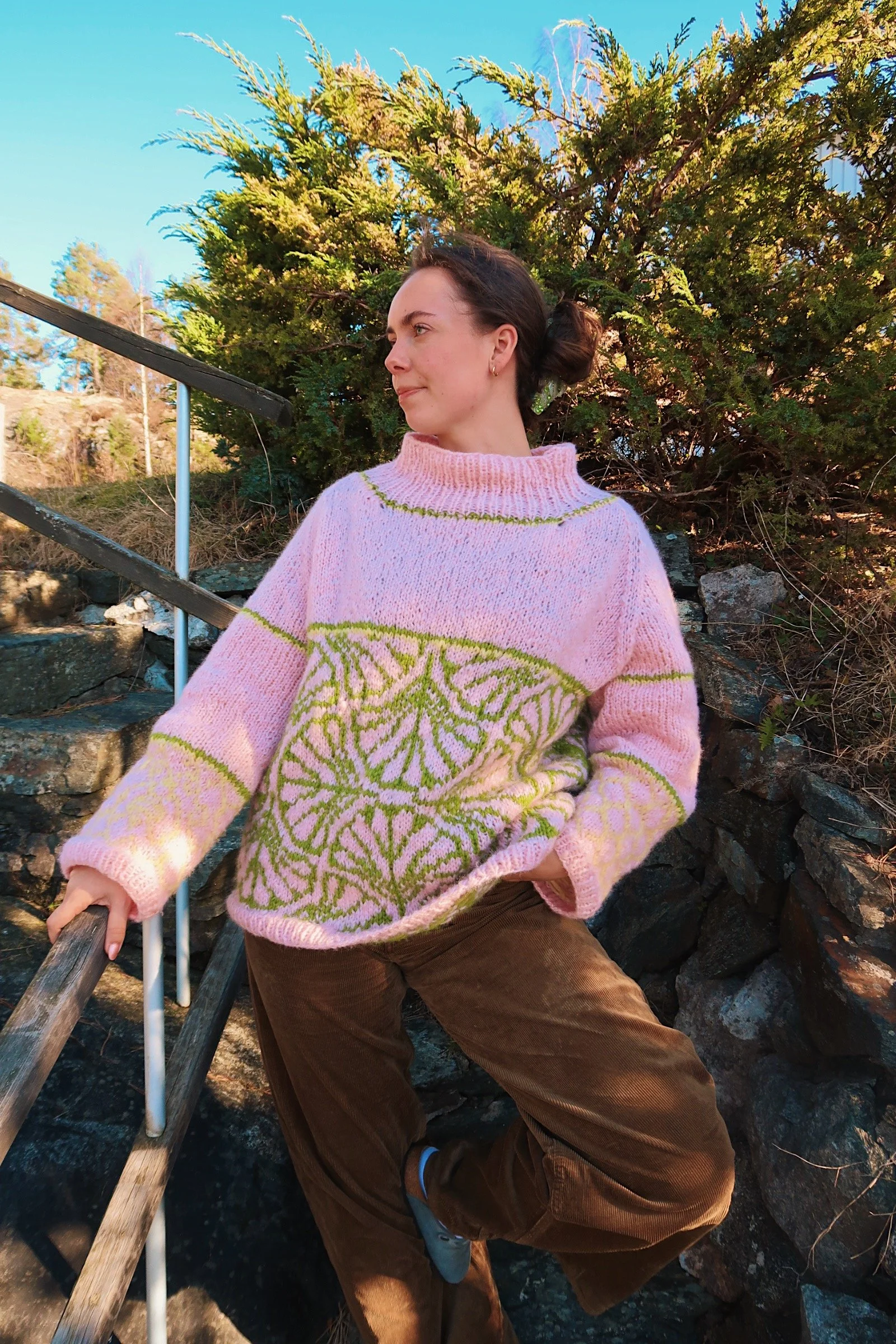 Image 2 of 4
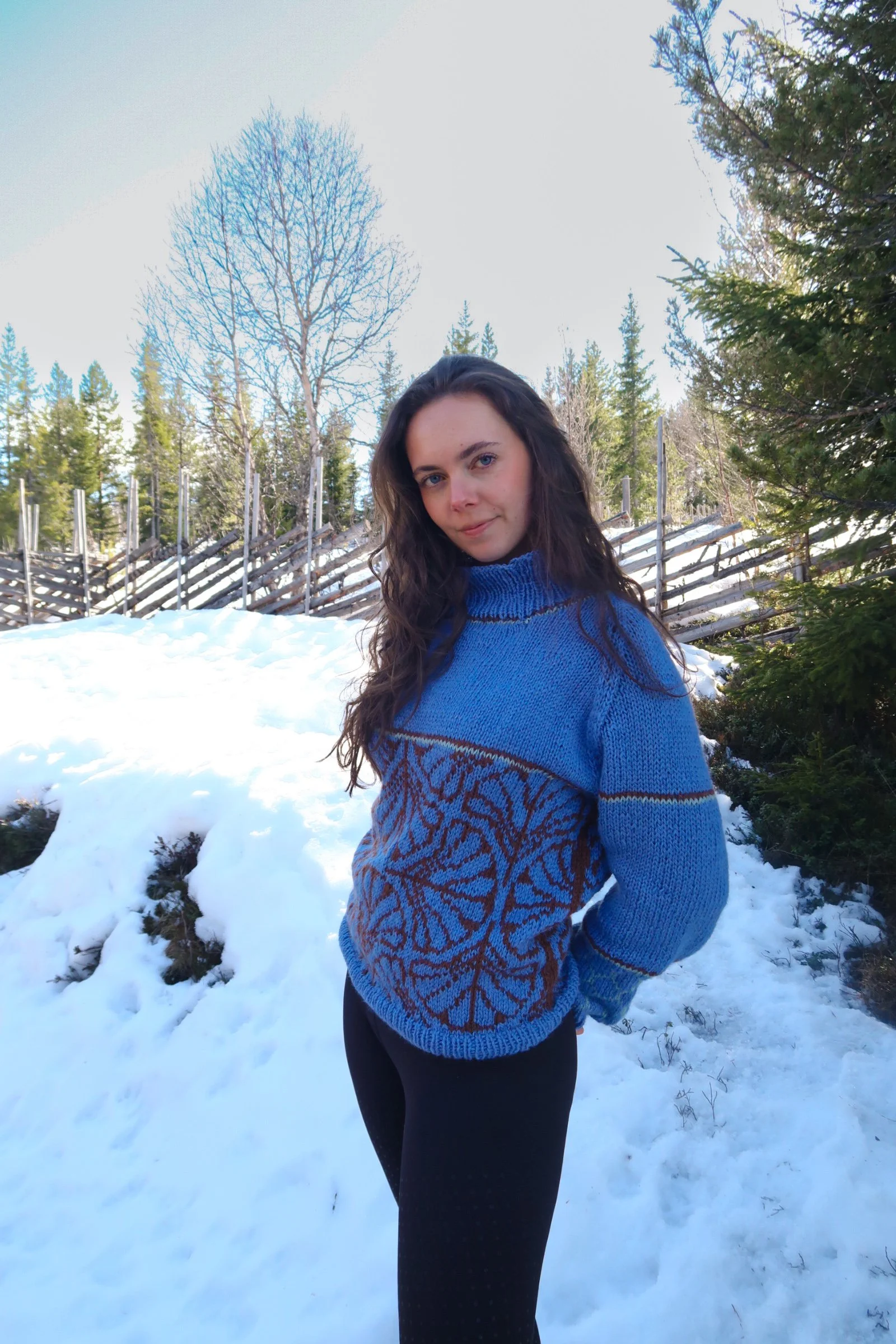 Image 3 of 4
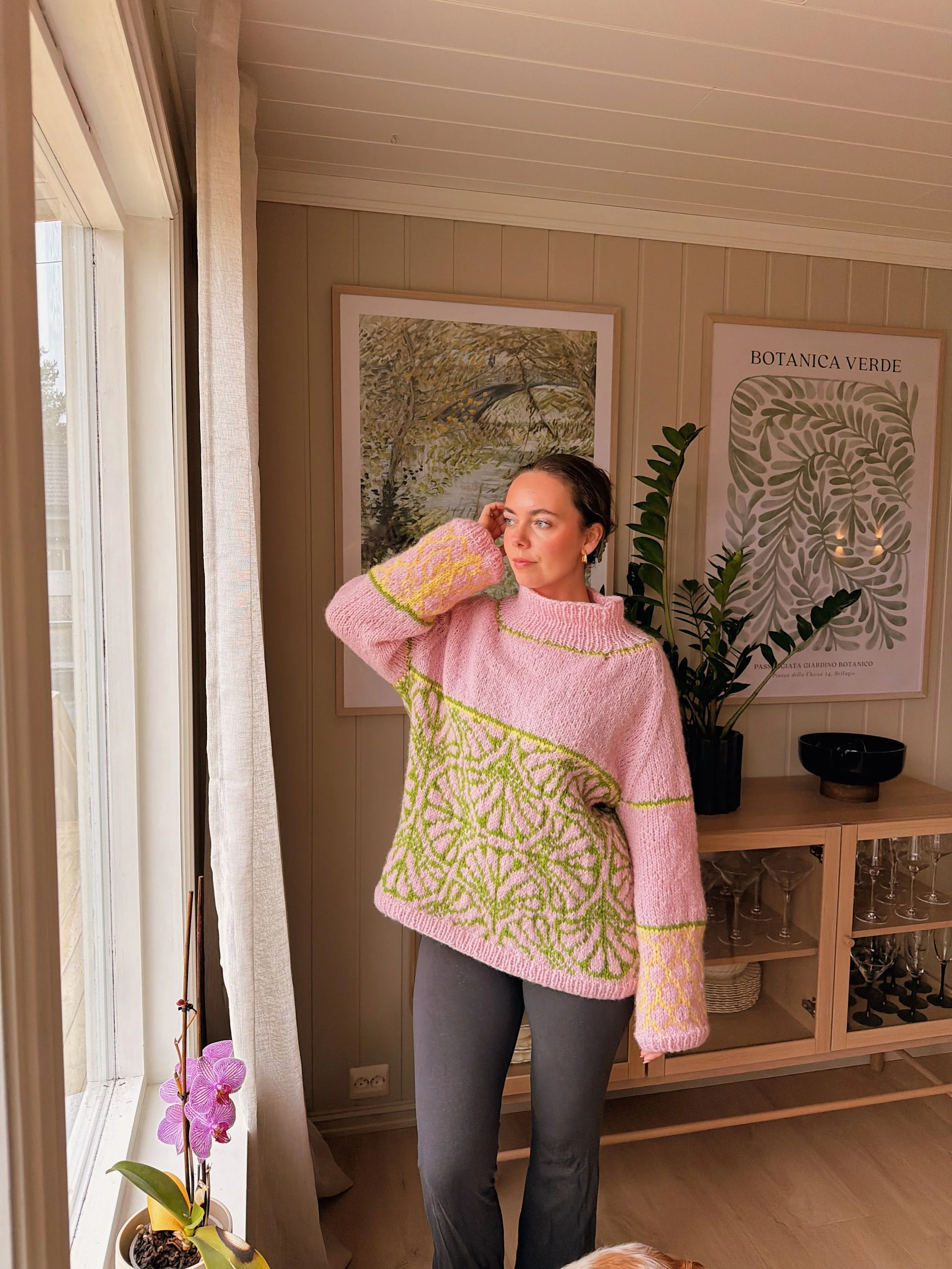 Image 4 of 4
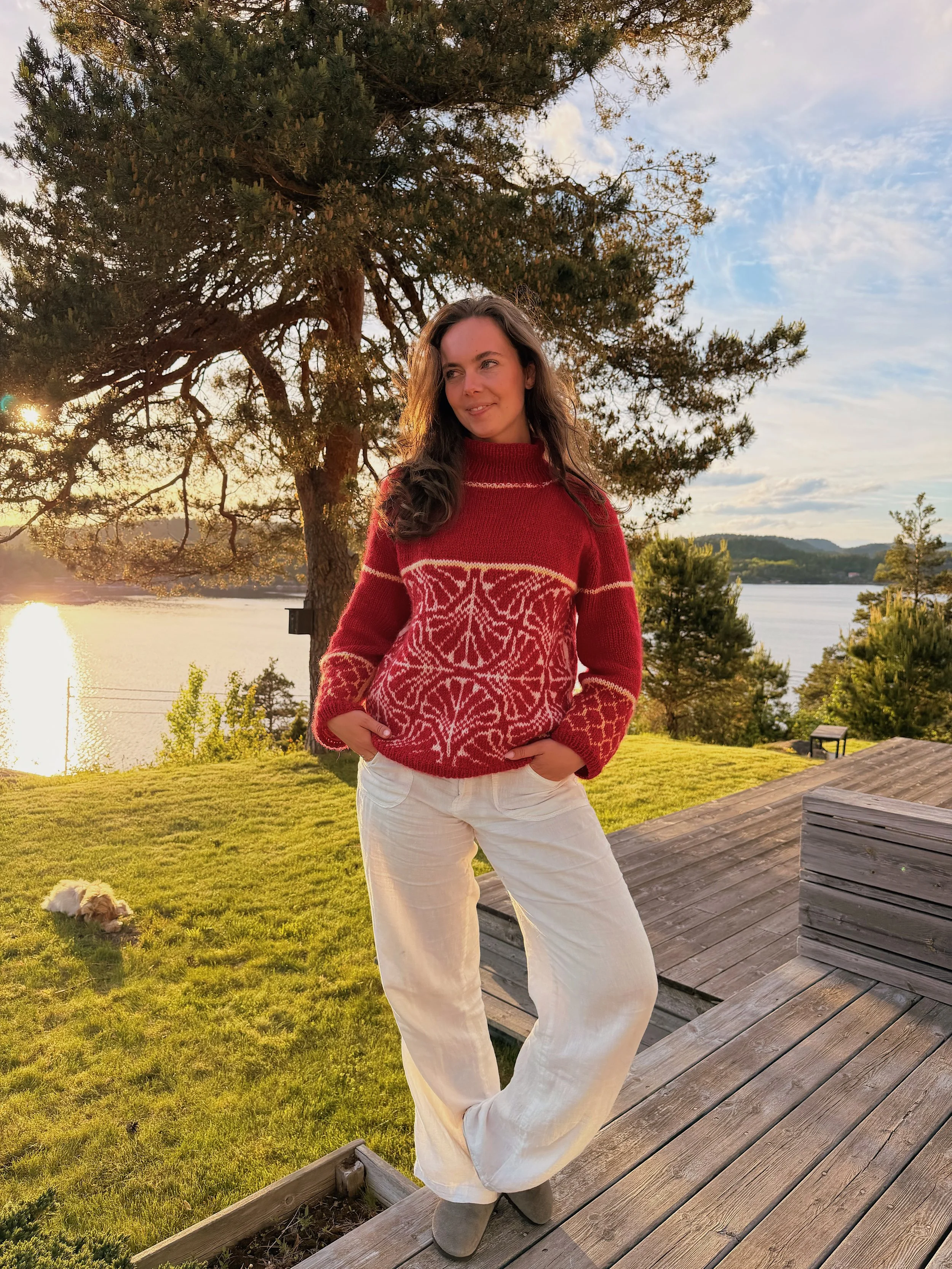
This sweater is worked bottom-up, and the sleeves are attached to the bodyusing raglan-decreases. Thesweater is knit on 6 mm (US 10) needle and the ribbing is knit using 5 mm (US 8) needle. The neckline is formes by picking up stitches for the neckline. Lastly the sleeves are sewn shut using matress stitches. Read the pattern ahead of stating, so you will always know what you next step is!
Gauge: 18 stitches on 6 mm circular needle // US 10 = 10 cm (4’’)
Sizes: S (M) L
Body circumference: 104 (118) 130 cm // 41’’ (46’’) 51’’
4 out of 5 = The chart for the body can be challenging
Materials: Main color Skappel Spinnvill 350g (400g) 500g, contrast color 1 Skappel Spinnvill 100g (100g) 150g, contrast color 2 Skappel Spinnvill 50g (50g) 50g
This sweater is worked bottom-up, and the sleeves are attached to the bodyusing raglan-decreases. Thesweater is knit on 6 mm (US 10) needle and the ribbing is knit using 5 mm (US 8) needle. The neckline is formes by picking up stitches for the neckline. Lastly the sleeves are sewn shut using matress stitches. Read the pattern ahead of stating, so you will always know what you next step is!
Gauge: 18 stitches on 6 mm circular needle // US 10 = 10 cm (4’’)
Sizes: S (M) L
Body circumference: 104 (118) 130 cm // 41’’ (46’’) 51’’
4 out of 5 = The chart for the body can be challenging
Materials: Main color Skappel Spinnvill 350g (400g) 500g, contrast color 1 Skappel Spinnvill 100g (100g) 150g, contrast color 2 Skappel Spinnvill 50g (50g) 50g